




Pilots
NDDB is at the forefront of pioneering renewable energy solutions in the dairy sector, focusing on efficient manure management, biogas production, and sustainable agricultural practices. Since 2018, our initiatives have led to the development of various manure management models that promote clean energy generation while enhancing soil fertility through organic fertilizers. The Zakariyapura Model empowers rural households by converting cow dung into biogas for cooking fuel and nutrient-rich slurry for farming. The Varanasi Model, a large-scale biogas plant, integrates renewable energy into dairy processing, reducing operational costs and enhancing sustainability. Similarly, the Banas Model converts dung into Bio-CNG for vehicles, offering additional income streams for farmers and promoting carbon neutrality. These innovations, supported by government schemes and corporate partnerships, create a robust manure value chain, reducing dependency on fossil fuels and chemical fertilizers while ensuring environmental sustainability.
Beyond manure management, NDDB is revolutionizing the dairy value chain through innovative technologies. The Mobile Milk Collection System, piloted in Ladakh, enhances milk collection and testing in remote areas, ensuring transparency and fair pricing for farmers. The Farm-Level Dairy Processing Unit enables on-farm production of value-added dairy products, increasing farmers’ profitability and reducing wastage. Additionally, NDDB’s collaboration with Tata Power Renewable Microgrid Limited (TPRMG) focuses on solarizing dairy infrastructure, integrating biogas power with solar microgrids, and advancing carbon-neutral dairying. These initiatives collectively contribute to sustainable rural development, enhance energy security, and support India’s transition towards a greener, self-sufficient dairy sector.
A. Renewable Energy Initiatives: Biogas and Manure Management
With the continuous efforts in the Manure Management domain since 2018, NDDB undertook various innovations for the efficient management of the dung. These initiatives have now resulted into development of different Manure Management Models wherein the core focus is not only in the efficient production and use of clean energy but also in propagation of sustainable agricultural practices.
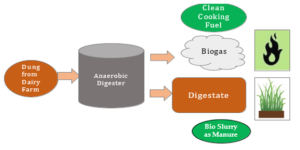
Figure: Manure value chain model
A.1 Decentralised – Zakariyapura model:
To capitalise the abundant availability of dung in the rural area and making the rural households self-sustainable (Atma Nirbhar) by sufficing the requirements of energy (fuel for kitchen) and fertiliser, NDDB started the manure management initiative with few farmers in one village of Anand district in Gujarat which subsequently gained prominence as ‘Zakariyapura Model’.
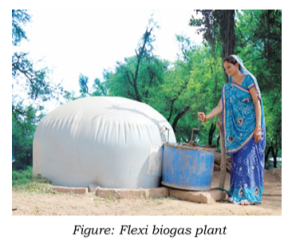
Under the model, flexi biogas plants of 2 cubic meter size were installed in the backyard of the dairy farmers with the initial investment of Rs. 25,000 per plant .With the biogas plant, the beneficiary can produce clean energy equivalent to 1.5 to 2 LPG cylinders per month costing around Rs. 1,500 to 2,000. Moreover, the slurry produced from the biogas plant (having higher nutrients than Farm Yard Manure) is being utilised in the farm as a manure which is helping to reduce the dependency on the costly chemical fertilisers and improving the soil fertility.
To establish the end-to-end manure value chain, India’s first all women manure cooperative is established to process the surplus slurry at the central slurry processing centre (within the cluster of biogas plants), which converts the slurry into slurry-based value-added organic fertilisers. Hence, with the sale of the surplus slurry to manure cooperative, each beneficiary earns Rs. 1,000 to 2,000 per month depending on the quality and quantity of slurry sold.
Put together with the setup of end-to-end manure value chain, beneficiaries save or earn Rs. 3,000 to 4,000 per month which not only recovers the initial investment in the first year itself but also improves the overall wellbeing by addressing the Sustainable Development Goals such as No. 1 (No Poverty), 3 (Good Health and Wellbeing), 5 (Gender Equality), 7 (Affordable and Clean Energy), 12 (Responsible Production and Consumption) and 13 (Climate Action).
Under Manure Management initiative, more than 30,000 household level biogas plants have been installed till date with support from NDDB under various schemes of Government of India/ Corporate Social Responsibility supported by companies/ NDDB’s own funds, etc. Moreover, on the basis of success of the Zakariyapura model, several manure management initiatives at the community/ cluster level with biogas units at individual household level and centralised processing have been taken up in 11 locations (9 states) across the country. Further, NDDB’s Zakariyapura model is now included in the GOBARDhan scheme of Government of India, with NDDB as a technical partner under the scheme.
A.2 Centralised – Varanasi model:
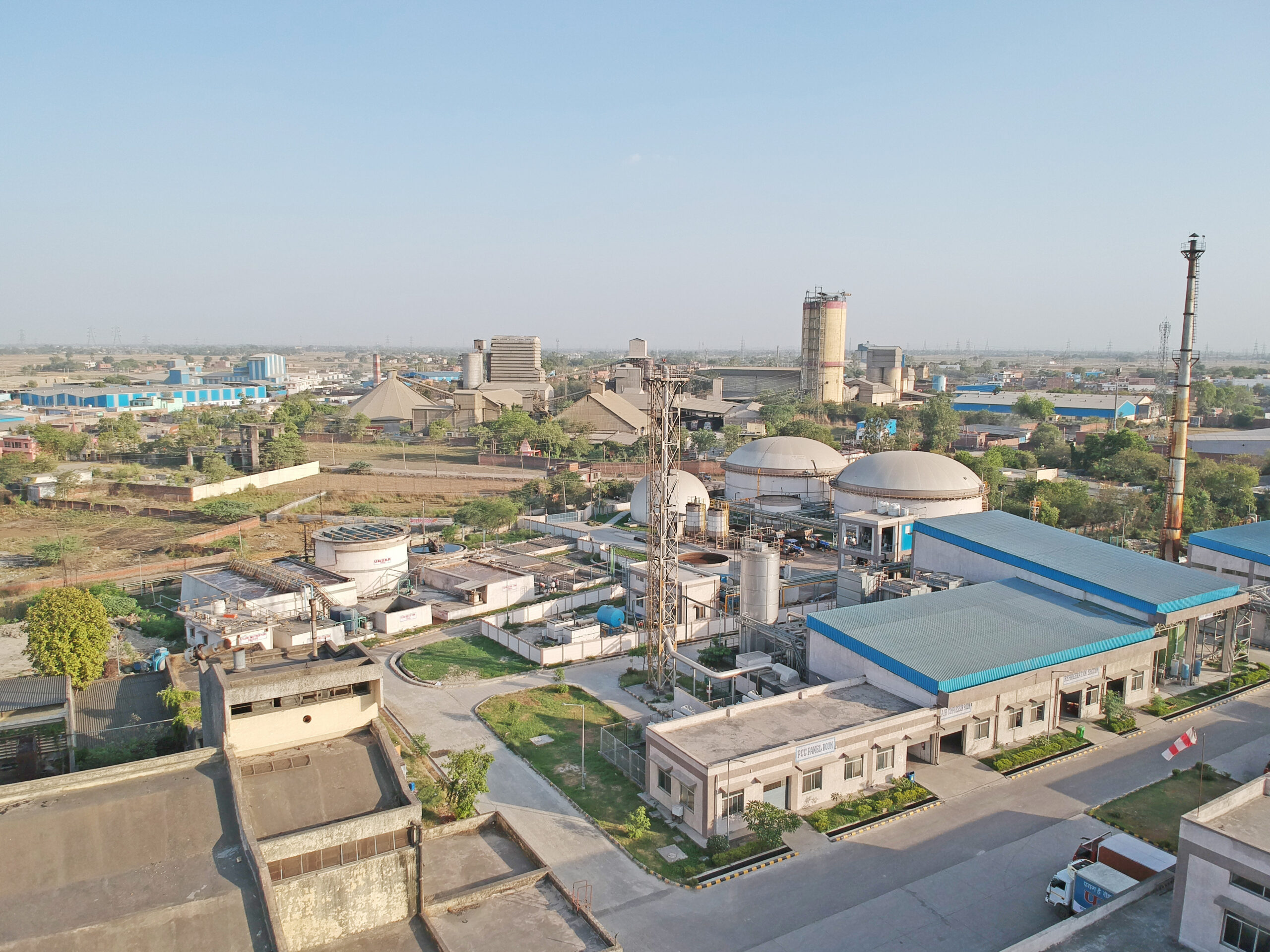
With financial and technical support from NDDB, Varanasi Milk Union has set up a cow dung-based biogas plant which has a capacity to generate 4,000 cubic meter biogas daily. This is one of its kind of centralised model in which cow dung is procured from the farmers and the biogas generated is utilised to meet the thermal and electrical energy needs of the dairy plant for processing of milk and generation of steam etc. This model is known as the ‘Varanasi Model’.
At the 100% capacity, the plant needs 100 MT of dung per day which is aggregated from farmers and Gaushalas within a radius of about 10 to 15 km of the dairy plant to produce biogas every day. The bio slurry produced from the biogas plant is separated into solid and liquid fractions to manufacture Phosphate Rich Organic Manure (PROM). This not only promotes use of green energy but also reduces the processing cost.
While on the one hand farmers are getting price of cow dung along with milk, on the other hand along with meeting the energy requirements of the dairy plant, organic fertiliser is being produced which is improving the agricultural productivity and also improving the soil health. The plant was inaugurated by Hon’ble Prime Minister Shri Narendra Modi on 7th July 2023. With the use of the biogas in the dairy plant, it replaced the use of Light Diesel Oil (LDO) and hence, the processing cost of milk reduced by Rs. 0.40 to 0.50 per litre. Based on the learning, NDDB is in process to to replicate the ‘Varanasi Model’ in Barauni Dairy in Bihar with support of ONGC
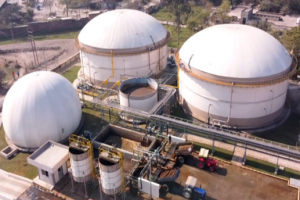
Figure Centralised Varanasi model
A.3 Centralised – Banas model:
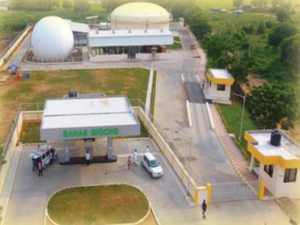
As a part of our Hon’ble Prime Minister’s vision to increase farmers’ income, a ground-breaking initiative in the Manure Management domain was taken by Banas Dairy by setting up a large-scale biogas unit with the raw biogas generation capacity of 2,000 cubic metres in the year 2020. The pilot project was set up in the Dama village of Banaskantha district of Gujarat which has the capacity to generate Bio-CNG from cow dung. It yields approximately 2,000 cubic meters of raw biogas daily. The generated raw biogas is compressed and purified before using as Bio-CNG for the vehicles and the bio-slurry is being utilised for the production of organic fertilisers which is now known as ‘Banas Model’ .
The primary raw material used in the biogas production process is the cow dung. The plant engages in procuring 40 MT of dung on daily basis from a network of about 250 dairy farmers situated in the nearby 12 villages. The procurement process is executed through a well-organised system involving dedicated routes in line with the milk collection system. The dairy farmers are paid an average of Rs. 1.0 per kg of dung supplied. The digested slurry is further processed to produce solid fertilisers such as PROM, Fermented Organic Manure (FOM) and liquid fertilisers. Overall, the Banas model helps provide additional income to farmers, convert cow dung to wealth, improve hygiene and environment, produce nutrient rich fertiliser and generate clean energy.
Suzuki R&D Centre India Pvt Ltd (SRDI) – a fully owned subsidiary of Suzuki Motor Corporation (SMC), Japan approached NDDB to explore possibilities of collaboration for promoting dung based Compressed Biogas (CBG) as a vehicle fuel. In this context, NDDB, SRDI and Banas Dairy have signed an agreement to take up the four such CBG projects in Banaskantha district to replicate the ‘Banas Model’.
The major objective of this collaboration is to design, develop, implement and scale up innovative business models to efficiently utilise cow dung as a source of energy for fuelling transportation needs and as a rich source of organic fertiliser while achieving carbon neutrality. SRDI wishes to promote dung based CBG stations across the country with the help of NDDB, so that CBG based affordable rural transportation can be promoted which would in turn help in achieving carbon neutrality. Continuous support is also provided for plant management and product development to make Banas BioCNG plant operations more profitable.
Figure. Centralised Banas model
NDDB has developed an expertise in different capacity biogas plants and organic fertilisers and is supporting various agencies including Banas Dairy in setting up of the different capacity biogas plants, Operations and management of plants, improving efficiencies, development of different types of organic fertilisers and strategies to propagate them etc.
NDDB has established a fully owned subsidiary named NDDB Mrida Ltd to take scale up the manure management initiatives. (A click here can take to page of NDDB Mrida Ltd)
B. Innovation in Dairy Value Chain
B.1 Mobile Milk Collection System
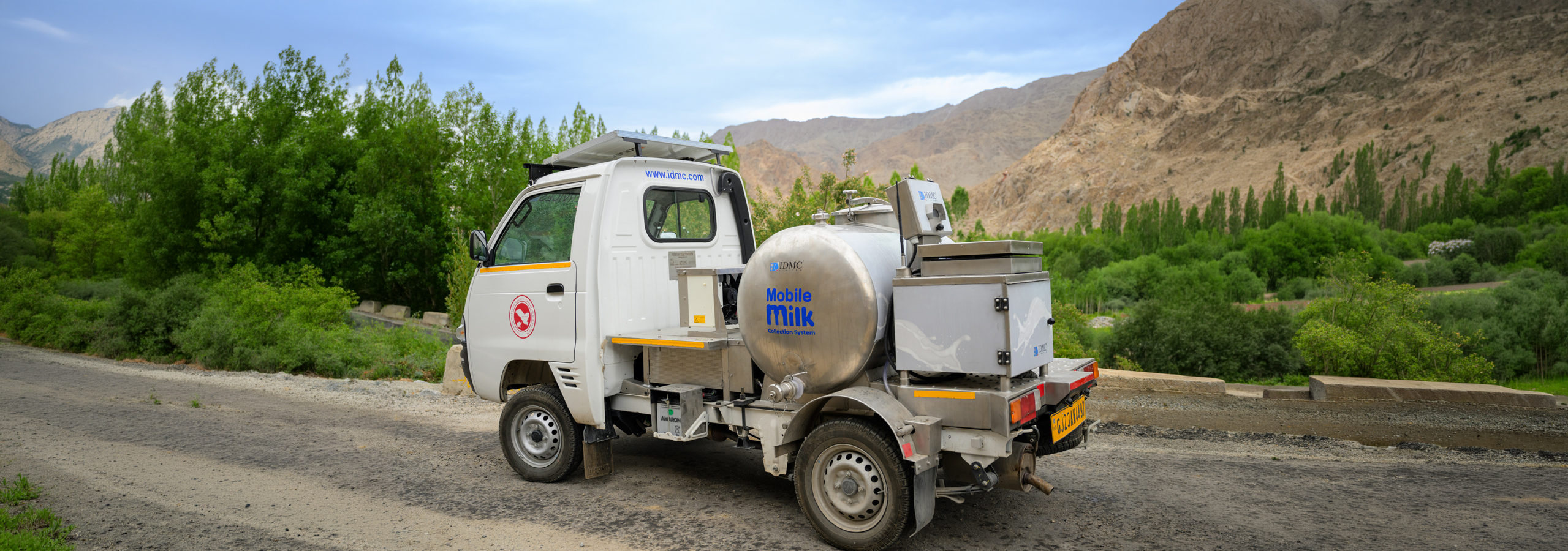
The Mobile Milk Collection & Cooling System enhances milk collection, testing, and cooling in remote areas, ensuring fair and transparent transactions for dairy farmers. Mounted on a Maruti Suzuki Super Carry vehicle, the system includes a 300L Bulk Milk Cooler (BMC) powered by the vehicle’s engine and a Data Processor-based Milk Collection Unit (DPMCU) supported by a 100W solar panel. Piloted in Ladakh, the system improves milk quality by enabling automated testing and on-site cooling, reducing spoilage and enhancing procurement efficiency. It also ensures fair pricing through transparent milk testing and provides farmers access to organized dairy networks. The integration of solar power further enhances energy efficiency, making the system environmentally sustainable.
B.2 Farm-Level Milk & Milk Product Processing Unit
NDDB and IDMC have developed a farm-level dairy processing unit that enables farmers to produce value-added dairy products such as pasteurized milk, dahi, lassi, ghee, shrikhand, and mozzarella cheese directly at the farm A demonstration unit was established in Davalpura village, Anand district, showcasing its potential to dairy entrepreneurs across India. By decentralizing dairy processing, the unit enhances farm profitability, reduces waste, and empowers farmers to meet consumer demand for fresh, high-quality dairy products. This initiative supports long-term sustainability and self-reliance in the dairy sector.
NDDB is at the forefront of pioneering renewable energy solutions in the dairy sector, focusing on efficient manure management, biogas production, and sustainable agricultural practices. Since 2018, our initiatives have led to the development of various manure management models that promote clean energy generation while enhancing soil fertility through organic fertilizers. The Zakariyapura Model empowers rural households by converting cow dung into biogas for cooking fuel and nutrient-rich slurry for farming. The Varanasi Model, a large-scale biogas plant, integrates renewable energy into dairy processing, reducing operational costs and enhancing sustainability. Similarly, the Banas Model converts dung into Bio-CNG for vehicles, offering additional income streams for farmers and promoting carbon neutrality. These innovations, supported by government schemes and corporate partnerships, create a robust manure value chain, reducing dependency on fossil fuels and chemical fertilizers while ensuring environmental sustainability.
Beyond manure management, NDDB is revolutionizing the dairy value chain through innovative technologies. The Mobile Milk Collection System, piloted in Ladakh, enhances milk collection and testing in remote areas, ensuring transparency and fair pricing for farmers. The Farm-Level Dairy Processing Unit enables on-farm production of value-added dairy products, increasing farmers’ profitability and reducing wastage. Additionally, NDDB's collaboration with Tata Power Renewable Microgrid Limited (TPRMG) focuses on solarizing dairy infrastructure, integrating biogas power with solar microgrids, and advancing carbon-neutral dairying. These initiatives collectively contribute to sustainable rural development, enhance energy security, and support India’s transition towards a greener, self-sufficient dairy sector.
Renewable Energy Initiatives: Biogas and Manure Management
With the continuous efforts in the Manure Management domain since 2018, NDDB undertook various innovations for the efficient management of the dung. These initiatives have now resulted into development of different Manure Management Models wherein the core focus is not only in the efficient production and use of clean energy but also in propagation of sustainable agricultural practices.
To capitalise the abundant availability of dung in the rural area and making the rural households self-sustainable (Atma Nirbhar) by sufficing the requirements of energy (fuel for kitchen) and fertiliser, NDDB started the manure management initiative with few farmers in one village of Anand district in Gujarat which subsequently gained prominence as ‘Zakariyapura Model’.
Under the model, flexi biogas plants of 2 cubic meter size were installed in the backyard of the dairy farmers with the initial investment of Rs. 25,000 per plant .With the biogas plant, the beneficiary can produce clean energy equivalent to 1.5 to 2 LPG cylinders per month costing around Rs. 1,500 to 2,000. Moreover, the slurry produced from the biogas plant (having higher nutrients than Farm Yard Manure) is being utilised in the farm as a manure which is helping to reduce the dependency on the costly chemical fertilisers and improving the soil fertility.
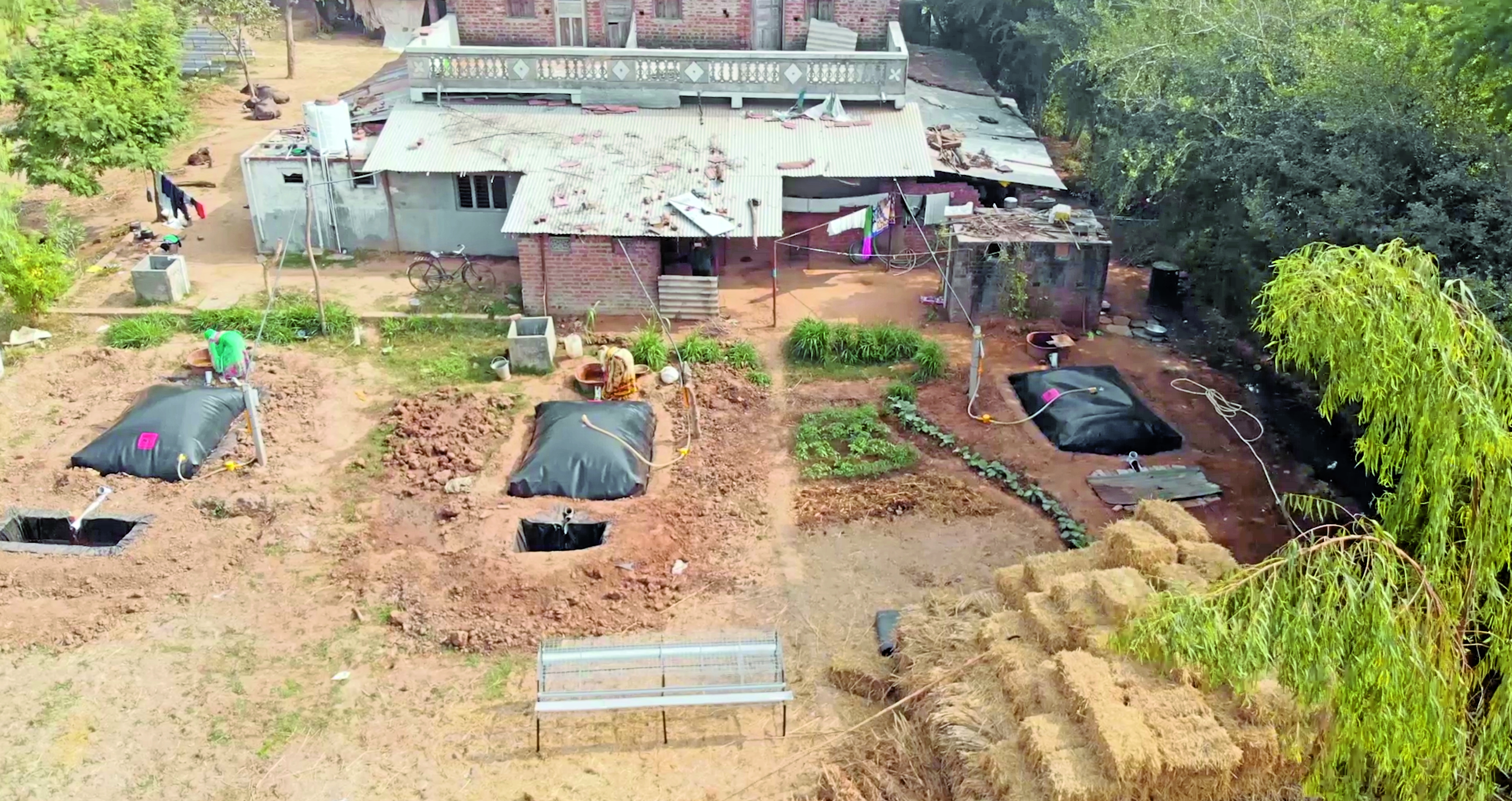
To establish the end-to-end manure value chain, India’s first all women manure cooperative is established to process the surplus slurry at the central slurry processing centre (within the cluster of biogas plants), which converts the slurry into slurry-based value-added organic fertilisers. Hence, with the sale of the surplus slurry to manure cooperative, each beneficiary earns Rs. 1,000 to 2,000 per month depending on the quality and quantity of slurry sold.
Put together with the setup of end-to-end manure value chain, beneficiaries save or earn Rs. 3,000 to 4,000 per month which not only recovers the initial investment in the first year itself but also improves the overall wellbeing by addressing the Sustainable Development Goals such as No. 1 (No Poverty), 3 (Good Health and Wellbeing), 5 (Gender Equality), 7 (Affordable and Clean Energy), 12 (Responsible Production and Consumption) and 13 (Climate Action).
Under Manure Management initiative, more than 30,000 household level biogas plants have been installed till date with support from NDDB under various schemes of Government of India/ Corporate Social Responsibility supported by companies/ NDDB’s own funds, etc. Moreover, on the basis of success of the Zakariyapura model, several manure management initiatives at the community/ cluster level with biogas units at individual household level and centralised processing have been taken up in 11 locations (9 states) across the country. Further, NDDB’s Zakariyapura model is now included in the GOBARDhan scheme of Government of India, with NDDB as a technical partner under the scheme.
With financial and technical support from NDDB, Varanasi Milk Union has set up a cow dung-based biogas plant which has a capacity to generate 4,000 cubic meter biogas daily. This is one of its kind of centralised model in which cow dung is procured from the farmers and the biogas generated is utilised to meet the thermal and electrical energy needs of the dairy plant for processing of milk and generation of steam etc. This model is known as the ‘Varanasi Model’.
At the 100% capacity, the plant needs 100 MT of dung per day which is aggregated from farmers and Gaushalas within a radius of about 10 to 15 km of the dairy plant to produce biogas every day. The bio slurry produced from the biogas plant is separated into solid and liquid fractions to manufacture Phosphate Rich Organic Manure (PROM). This not only promotes use of green energy but also reduces the processing cost.
While on the one hand farmers are getting price of cow dung along with milk, on the other hand along with meeting the energy requirements of the dairy plant, organic fertiliser is being produced which is improving the agricultural productivity and also improving the soil health. The plant was inaugurated by Hon’ble Prime Minister Shri Narendra Modi on 7th July 2023. With the use of the biogas in the dairy plant, it replaced the use of Light Diesel Oil (LDO) and hence, the processing cost of milk reduced by Rs. 0.40 to 0.50 per litre. Based on the learning, NDDB is in process to to replicate the ‘Varanasi Model’ in Barauni Dairy in Bihar with support of ONGC
As a part of our Hon’ble Prime Minister’s vision to increase farmers' income, a ground-breaking initiative in the Manure Management domain was taken by Banas Dairy by setting up a large-scale biogas unit with the raw biogas generation capacity of 2,000 cubic metres in the year 2020. The pilot project was set up in the Dama village of Banaskantha district of Gujarat which has the capacity to generate Bio-CNG from cow dung. It yields approximately 2,000 cubic meters of raw biogas daily. The generated raw biogas is compressed and purified before using as Bio-CNG for the vehicles and the bio-slurry is being utilised for the production of organic fertilisers which is now known as ‘Banas Model’ .
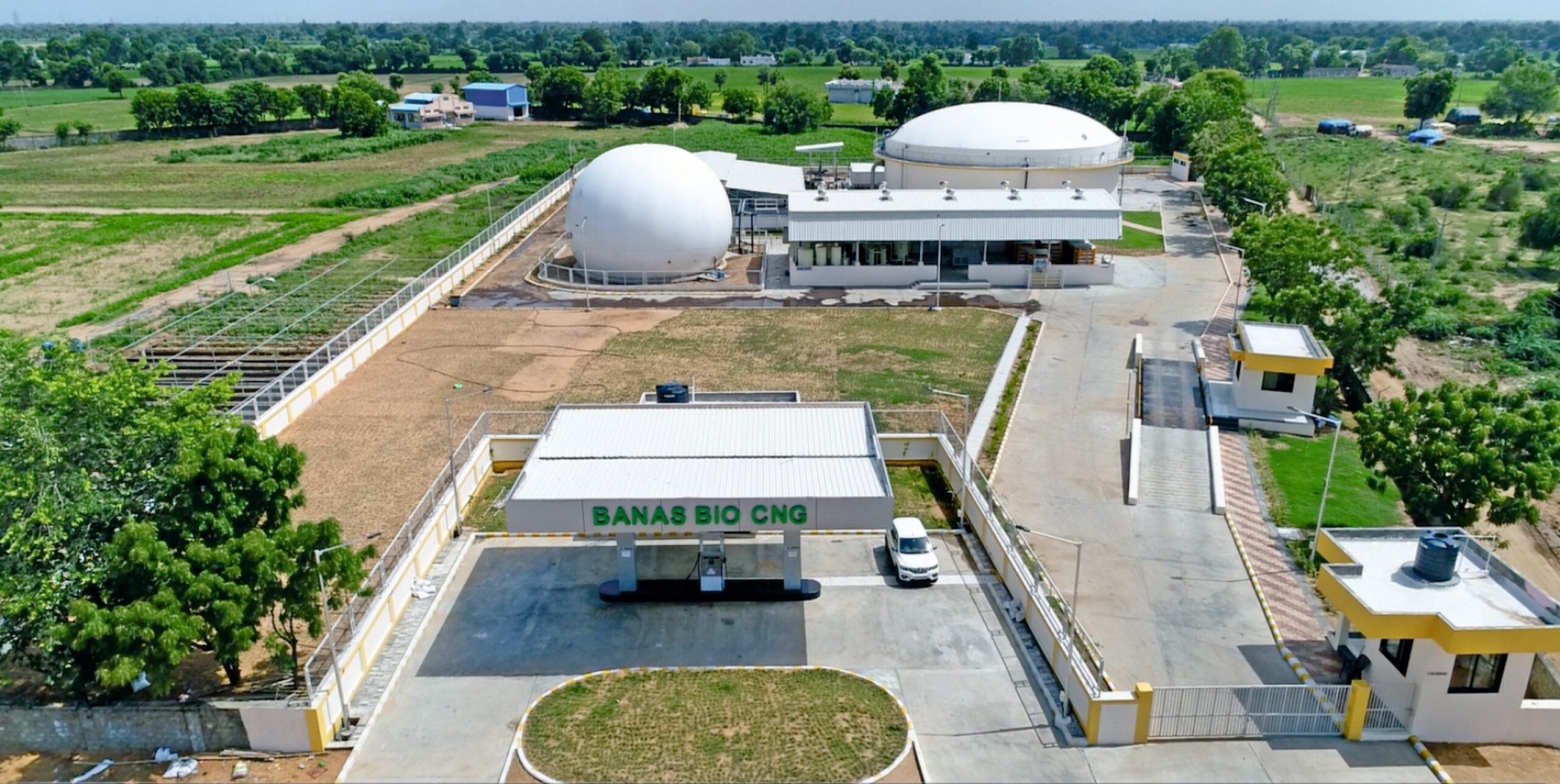
The primary raw material used in the biogas production process is the cow dung. The plant engages in procuring 40 MT of dung on daily basis from a network of about 250 dairy farmers situated in the nearby 12 villages. The procurement process is executed through a well-organised system involving dedicated routes in line with the milk collection system. The dairy farmers are paid an average of Rs. 1.0 per kg of dung supplied. The digested slurry is further processed to produce solid fertilisers such as PROM, Fermented Organic Manure (FOM) and liquid fertilisers. Overall, the Banas model helps provide additional income to farmers, convert cow dung to wealth, improve hygiene and environment, produce nutrient rich fertiliser and generate clean energy.
Suzuki R&D Centre India Pvt Ltd (SRDI) - a fully owned subsidiary of Suzuki Motor Corporation (SMC), Japan approached NDDB to explore possibilities of collaboration for promoting dung based Compressed Biogas (CBG) as a vehicle fuel. In this context, NDDB, SRDI and Banas Dairy have signed an agreement to take up the four such CBG projects in Banaskantha district to replicate the ‘Banas Model’.
The major objective of this collaboration is to design, develop, implement and scale up innovative business models to efficiently utilise cow dung as a source of energy for fuelling transportation needs and as a rich source of organic fertiliser while achieving carbon neutrality. SRDI wishes to promote dung based CBG stations across the country with the help of NDDB, so that CBG based affordable rural transportation can be promoted which would in turn help in achieving carbon neutrality. Continuous support is also provided for plant management and product development to make Banas BioCNG plant operations more profitable.
NDDB has developed an expertise in different capacity biogas plants and organic fertilisers and is supporting various agencies including Banas Dairy in setting up of the different capacity biogas plants, Operations and management of plants, improving efficiencies, development of different types of organic fertilisers and strategies to propagate them etc.
NDDB has established a fully owned subsidiary named NDDB Mrida Ltd to take scale up the manure management initiatives. (A click here can take to page of NDDB Mrida Ltd)
Innovation in Dairy Value Chain
The Mobile Milk Collection & Cooling System enhances milk collection, testing, and cooling in remote areas, ensuring fair and transparent transactions for dairy farmers. Mounted on a Maruti Suzuki Super Carry vehicle, the system includes a 300L Bulk Milk Cooler (BMC) powered by the vehicle’s engine and a Data Processor-based Milk Collection Unit (DPMCU) supported by a 100W solar panel. Piloted in Ladakh, the system improves milk quality by enabling automated testing and on-site cooling, reducing spoilage and enhancing procurement efficiency. It also ensures fair pricing through transparent milk testing and provides farmers access to organized dairy networks. The integration of solar power further enhances energy efficiency, making the system environmentally sustainable.
NDDB and IDMC have developed a farm-level dairy processing unit that enables farmers to produce value-added dairy products such as pasteurized milk, dahi, lassi, ghee, shrikhand, and mozzarella cheese directly at the farm A demonstration unit was established in Davalpura village, Anand district, showcasing its potential to dairy entrepreneurs across India. By decentralizing dairy processing, the unit enhances farm profitability, reduces waste, and empowers farmers to meet consumer demand for fresh, high-quality dairy products. This initiative supports long-term sustainability and self-reliance in the dairy sector.
