





1. What are the advantages of Artificial Insemination (AI) over Natural Service?
With artificial insemination, a bull can breed more than 20,000 cows per year whereas with natural service no more than 200 could be bred. Hence, when artificial insemination is followed, for the same number of cows, a very few bulls are required compared to natural service. This means a very few best bulls could be used for AI leading to faster genetic progress. Moreover, there is much less risk of transmission of venereal diseases and detrimental recessive alleles. Besides, AI is economical. A high pedigreed bull can also be used even after its death if its frozen semen doses are stored and frozen semen doses can be shared even between continents.
2. How is AI different from natural service?
In natural service, the cow is taken to the bull for mating whereas in artificial insemination, the cow is artificially inseminated by a trained AI technician with a frozen semen dose of a bull maintained at a recognised semen station.
3. Is AI a treatment for infertility/ repeat breeding?
No, Artificial Insemination is not a treatment for infertility or repeat breeding. It is an artificial method to inseminate an animal with semen of disease free genetically superior pedigreed bull. It helps in preventing transmission of diseases through natural service. If an animal is not able to conceive through natural service due to infertility then it won’t be able to conceive through artificial insemination also.
4. Is there an advantage of using more than one dose in one heat?
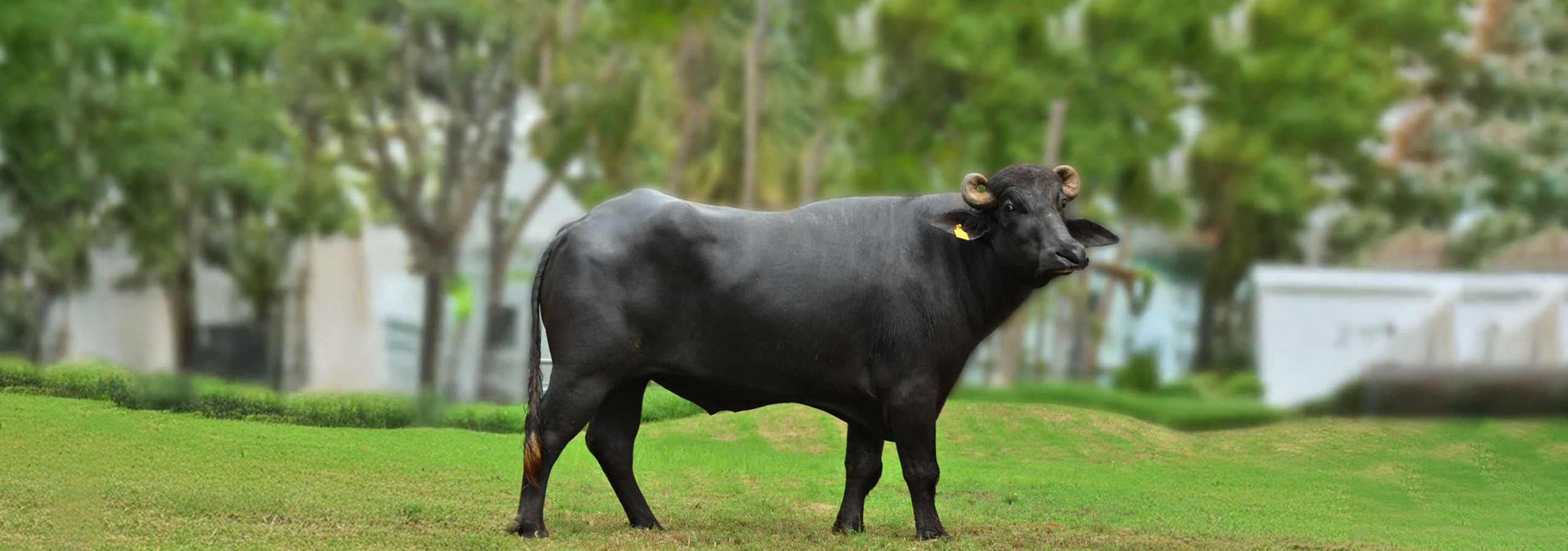
One frozen semen dose straw (0.25 ml capacity) is sufficient for the successful conception of an animal if AI is done at correct time of heat using good quality semen and using correct AI technique following SOP. However, in a few cases if the heat period is extended beyond normal duration (12 -18 hours), ovulation is also delayed and in such cases, second insemination may be required after 24 hours.
5. Should I take the animal to a bull after AI?
No, the animal should never be taken to a bull after AI.
6. What is the ideal success rate of AI?
Success rate of 40% and above is considered ideal.
7. Whether AI is successful in buffaloes?
Yes, AI in buffaloes is as successful as in cows. The only problem one may encounter with buffaloes is that they often do not exhibit heat symptoms very overtly during heat
8. There are multiple AI services providers in my area, how should I choose the correct AI service provider? What should I look for when AI Technician (AIT) is inseminating my animal?
The AIT, who uses frozen semen produced by A or B graded semen station and stores and carries it in proper cryocans (not in pocket or thermos or in water or on ice), should only be chosen. Name of the semen station is written on the semen straw, farmers’ should insist to see Sire Directory to ascertain the pedigree of the bull and grade of the semen station. While AIT is doing AI, it should be ensured that AIT is following SOP for AI. The Do’s and Don’ts of AI need to followed for better results
9. How to detect animal in heat? What is the right time of AI? What is silent heat?
The animal will show clear symptoms of heat like mounting on other animals, standing to be mounted, swollen vulva, frequent urination, restlessness, and bellowing. Long and clear strands of cervical mucus discharge will be seen hanging from the vulva. The animal will become off-fed and milk production will go down.
The right time to inseminate an animal is 12 hours after detection of heat. An animal detected in heat in the morning should be inseminated in the evening and the one detected in the evening should be inseminated the next morning. However, final decision to perform an AI should be taken after confirmation of the heat stage and quality of cervical discharge through rectal palpation.
Buffaloes often do not exhibit profound signs of heat, which is called as silent heat. In silent heat, the animal shows no sign or very few behavioural signs of heat and that too for a very short duration.
10. What is State breeding policy? Why should it be followed?
Every state has defined its own breeding policy based on geographical and climatic conditions of the state and distribution of different breeds in the state. Breeding policy is a guideline to indicate what breed and breed combination or exotic blood level is most suitable in the given agro climatic condition of the state. It should be followed to get the optimum output from your animals and to conserve the breed available in the state.
11. What type of semen should be used to breed different types of animals? Whether AIT carries all types/breeds of semen so that I can choose the best option for my animal? What is sire directory? Is it available with every AIT?
Semen used for upgrading non-descript animals and for well-defined breeds should be in accordance with the breeding policy of the state. Semen procured only from A and B graded semen stations should be used.
All AITs may not always carry the semen as per the breeding policy of the state so being an aware and progressive farmer, one should be vigilant and should insist to know the breed, exotic blood level and pedigree details of the bull, the semen of which is being used to breed your animal.
Sire directory is a record containing entire pedigree details of each bull in the semen station. Farmers can check INAPH sire directory to know more about AI bull. Ideally it should be available with AI service provider, if not, then the farmer may ask the service provider to obtain it from the semen station.
12. What is good quality semen? How to find out whether the semen used by the AIT is produced by ‘A’ or ‘B’ grade semen station?
Semen doses procured from A and B graded semen stations are supposed to be of good quality. However the farmer can check the Bull ID and semen station name printed on the straw.
Sire Directory usually have the details of grades awarded to the semen station.
13. Why are animals being ear tagged? How is it beneficial to me?
The animals are tagged to give a unique identity number to each and every animal in the country. Once the animal is ear tagged, all the activities (AI, pregnancy diagnosis, calving, milk recording, vaccination, health information) performed on that animal could be recorded in the national database and each and every animal will have a complete record of all the activities performed on it.
This would help in identifying which bull has produced the best performing progenies and thus would be able to demand/choose best bulls for breeding animals. Further, it would be beneficial during insurance, purchase and sale of animal as authentic information can be availed.
14. What is sexed semen? Where it is available? What is the cost? Is it available with all AI technicians? How to verify whether sexed semen has been used for my animal? Is it available for all breeds of cattle and for buffaloes also? What are the advantages of using sexed semen over conventional semen? What is the success rate?
Sexed semen is the semen which contains mainly either X bearing or Y bearing viable spermatozoa to produce progenies of a desired sex with about 80-90 per cent accuracy.
Currently 5 semen stations are producing sexed semen in India.
Sexed semen is available at the rate of Rs 900 to 2,000 per dose however some states are making it available at subsidised rate of Rs 100-300. Sexed semen is not available with all AITs.
To verify whether sexed semen has been used or not, the straw can be checked for the source of sexed semen and reliability of the source. Sexed semen is available for some of the breeds of cattle (Gir, Sahiwal, Tharparkar, Kankrej, Red Sindhi, Hariana, Gangatiri, CBHF/ CBJ and pure HF and Jersey etc.) and buffalo (Mehsana, Murrah and Jaffarabadi). Moreover, semen stations are including new breeds into their catalogues on demand for any breed. Further, imported sexed semen doses are also available with few organization.
Use of sexed semen guarantees 80-90 per cent accuracy of desired sex as compared to conventional semen straw where Male: Female ratio is about 50:50.
As sperm concentration in sexed semen straw is less as compared to conventional semen straw and sexing procedure pose a great deal of injury to the sexed sperm, conception rate is around 10 per cent less with sexed semen as compared to normal semen. However, with advancement of technology and sexing equipment, the gap between sexed and conventional semen in terms of conception rate is narrowing.
15. What is embryo transfer? Is it an alternative to AI to get my cow/buffalo conceived? My cow/buffalo is not getting conceived in spite of repeated AI, can I use ET to get them conceived? Who can provide me ET services? What is the cost? Can I have a choice of sex of calf through ET?
In embryo transfer technique, the embryos produced out of elite cow and bull is transferred to recipient animal which acts as a surrogate mother and carries the embryo to full term pregnancy. Embryos can be produced through MOET or IVF technique. ET is a technique to increase the reproduction rate of genetically superior females – to get more calves in a life time than possible through normal reproduction.
No, ET is not an alternative to AI to get the animal conceived. If your cow/ buffalo is not getting conceived in spite of repeated AI, it is not likely to get conceived by ET. For ET one needs reproductively healthy animals.
Presently few organisations are providing ET services to farmers’ level at limited scale (SAG, Bidaj; JK Trust, Pune etc.). NDDB also operates an R&D and training embryo transfer facility. Further, ET is being carried out by a few organisations in India namely SAG Bidaj, Kalsi ULDB, PBGSBS Haringhata, PLDB Punjab, GADVASU Punjab, Palampur HPLDB, NDRI Karnal, Niblet Barabanki UPLDB, MPSLPDC Bhadbhada, BAIF Pune, Lam Farm Guntur APLDA, Mattupatty KLDB, DLF Hosur TNLDA etc. , mainly for their own institutional purpose.
Yes, ET does provide a choice on the sex of the calf if sexed semen is used for insemination/ IVF.
An embryo cannot be transferred using an AI gun and it requires specialised transfer equipment, called ET Gun/ Syringe. Therefore, do not believe if a person claims to have an embryo and proposes to transfer it into your animal. Check his antecedents and credentials properly.
16. What is Progeny Testing? Why PT is not done in all breeds? How to select breeding bull without PT? What are their advantages to farmers?
Progeny Testing (PT) programme is a scientifically proven process to evaluate a bull on the basis of the performance of its progenies i.e., is the performance of its daughters. It is for evaluating and selecting bulls of best genetic merit to produce next generation of genetically improved animals.
It serves two purposes
- Top few proven bulls are mated to females with higher breeding value for milk yield to produce the next generation of bulls which are again progeny tested and the cycle continues.
- The bulls thus produced are used for semen production that are used in general AI programme to produce next generation of genetically improved animals.
PT programme is an elaborate and costly programme. It takes a time period of 8 to 9 years to prove a bull. Moreover, there is need of a proper size of breedable female population in a compact area enabling distribution of test doses of the bull under test. PT programme is being carried out for breeds like Gir, Sahiwal, Jersey, HF Cross, Jersey Cross, Murrah and Mehsana.
For those breeds where AI is not popular and an elaborate AI infrastructure does not exist, the bulls are selected based on the performance of its dam. This process is known as Pedigree Selection.
17. Why do we record milk of daughters in Progeny Testing?
In PT programme, the test bull is evaluated on the basis of the performance of its daughters. Therefore for accurate evaluation of bulls, records of milk yield of their daughters is essential.
So we record milk of daughters to judge superiority of genes responsible for milk production in her sire.
18. How Milk recording in general helps the farmer?
Milk recording helps the farmer to get a complete lactation record of his animal. He also gets an idea of performance of his animal as compared to the performance of other animal in his herd and village. This information helps him to take a decision on the animal, whether to retain it, cull it or use it for production of herd replacement.
19. Why are different traits such as body conformation, milk components, growth rate are being measured?
Milk yield is not the sole criteria for judging the performance of the animal. Milk should also be tested for other milk components like fat percentage, protein and lactose content as these parameters decide the market price of milk.
Body conformation and growth rate are highly and positively correlated to production and reproduction traits.
20. Why are my animals being tested for diseases under PT and PS projects?
As PT and PS projects are implemented for production of High Genetic Merit (HGM) bulls which are used for semen production and to ensure production of disease free semen, it is necessary that they are free from certain disease which may be transmitted through semen, therefore whenever HGM bulls are produced, the bull calf as well its mother are tested to confirm their disease free status.
21. Is blood collection harmful to the animal?
No. Blood collection causes no harm to the animals. Very small quantity of blood is collected from the animals to test the animals for certain diseases. This helps in identifying animals which may spread the diseases to the next generation animals or to the humans. In PT projects, blood is also collected from some daughters and all male calves born out of nominated mating to verify their parentage. This is to ensure that the bulls are being evaluated on performance of their own daughters and to ensure bull calves being selected for semen production are really from the elite parents. Blood is also required to test for breed purity, genetic disorders, genomic breeding value estimation etc.
22. What to look for in a dairy animal when one goes to buy one?
While buying dairy animal, look for reliable source in order to get correct information regarding exotic blood level in case of crossbreds, milk production, lactation number, pedigree details, disease and health status, udder health. It is necessary to verify pregnancy status in case of pregnant animals and milk production in case of lactating animals. Further, the animal should be active, the feet should be straight from the back side and strong in built. Chest should be moderately wide. Body, when seen from the side should look wedge shaped. It should not have extra fat as this may affect the fertility. A good dairy animal is usually moderately thin with slightly prominent and wide hip bones.
23. What is an economic animal?
Economic animal is one which produces one calf in a year, resistant to diseases, produce maximum milk with minimum input cost i.e. per litre milk production cost should be minimum.
24. Why improvement of indigenous breeds is important? What are important indigenous breeds and where are they available?
Indigenous breeds are well adapted to our existing agro-climatic conditions and are resistant to many tropical diseases and can survive and produce on marginal and poor feed and fodder resources. Some of these breeds are well known for their high milk and fat production. However, the production potential of these animals has deteriorated over a period of time due to lack of selection. The high producing exotic breeds do not have the above characteristics and are very difficult to manage in tropical Indian scenario. Hence indigenous breeds should be improved.
Important indigenous milch breeds of cattle are Sahiwal in Punjab, Gir and Kankrej from Saurashtra region of Gujarat, Tharparkar from Jodhpur and Jaisalmer districts of Rajasthan, Rathi from Bikaner and Ganganagar districts of Rajasthan and Red Sindhi from Uttarakhand; while buffalo breeds include Murrah from Haryana, Punjab and western UP, Mehsana, Jaffarabadi, and Banni from Gujarat, Nili-Ravi from Punjab and Pandharpuri from Maharashtra.
25. How to improve the fertility of my animal?
Fertility is a function of feeding and management. Healthy animals have high fertility. So, for high fertility, animals need to be fed well balanced diet based on the stage of its life cycle. Additionally, proper heat detection, proper time of insemination, proper technique of insemination, quality of semen used are also some important factors affecting fertility. Reproductive diseases are reason for infertility only in small percentage (15-20 per cent) of animals.
26. How can I get a progeny of better productivity from my existing animals?
Progenies of high producing parents have higher production. Therefore, the existing female animals should be bred using semen from bulls of high genetic merit for milk production. This increases the probability of getting progenies with higher production and productivity. Semen used for breeding your animal needs to be sourced from the reliable source produced from ‘A’ or ‘B’ graded semen station and breeding policy needs to be followed.
27. Which is most suitable animal for Dairying – indigenous cattle, crossbred cattle or buffalo?
Choice of breed or breed combination primarily depends on resource availability, climatic conditions, availability of required inputs (feed and healthcare facilities), availability of market for milk, criteria for milk pricing etc.-In resource poor situations indigenous cattle or buffaloes could be preferred while with moderate to good resources crossbred cattle could be preferred. Places where fat percentage is the price criteria, buffaloes may be preferred.
28. Which is better – a Jersey cross or HF cross animal? What percentage of exotic blood is ideal in a crossbred animal and why?
One should consider resource availability before deciding on breed. If we have low to moderate resources and more humid climate Jersey Crossbred are suitable. If feeding and management is not a constraint, HF Crossbred cows should be preferred. Again if demand is for milk with high fat content, HF crossbred are at disadvantage. In our conditions we should target for 50 per cent exotic inheritance in crossbred animals as with increasing exotic blood level, the animals will be more prone to diseases and heat stress. Management of such animals will be difficult.
29. Some superstitions/ myths connected with AI – produces only male calves, weak calves, reduces milk yield etc.
There are no scientific evidences to support such myths. Analysing a large number of observations, it is observed that there is no adverse effect of AI on male: female ratio, calf birth weight or milk production of existing dam.
With artificial insemination, a bull can breed more than 20,000 cows per year, whereas with natural service, no more than 200 could be bred. This means that when AI is used, significantly fewer bulls are required for the same number of cows compared to natural service. Consequently, a very small number of the best bulls can be utilized for AI, leading to faster genetic progress. Moreover, there is a much lower risk of transmitting venereal diseases and detrimental recessive alleles. Besides, AI is more economical. A highly pedigreed bull can even be used after its death if its frozen semen doses are stored, and these frozen semen doses can be shared even between continents.
In natural service, the cow is taken to the bull for mating, whereas in artificial insemination, a trained AI technician artificially inseminates the cow with a frozen semen dose from a bull maintained at a recognized semen station.
No, Artificial Insemination is not a treatment for infertility or repeat breeding. It is an artificial method to inseminate an animal with semen from a disease-free, genetically superior pedigreed bull. It primarily helps in preventing the transmission of diseases that can occur through natural service. If an animal is unable to conceive through natural service due to infertility, it's unlikely to conceive through artificial insemination either.
One frozen semen dose straw (0.25 ml capacity) is generally sufficient for the successful conception of an animal if AI is performed at the correct time of heat using good quality semen and the correct AI technique following Standard Operating Procedures (SOPs). However, in a few cases, if the heat period extends beyond the normal duration (12-18 hours), ovulation may also be delayed. In such instances, a second insemination may be required after 24 hours.
No, the animal should never be taken to a bull after AI.
A success rate of 40% and above is considered ideal.
Yes, AI in buffaloes is as successful as in cows. The only challenge one may encounter with buffaloes is that they often do not exhibit heat symptoms very overtly during their heat period.
You should choose an AIT who uses frozen semen produced by A or B graded semen stations and who stores and carries it in proper cryocans (not in pockets, thermos flasks, water, or on ice). The name of the semen station is printed on the semen straw; farmers should insist on seeing the Sire Directory to ascertain the pedigree of the bull and the grade of the semen station. While the AIT is performing AI, ensure they are following the Standard Operating Procedures (SOPs) for AI. Adhering to the "Do's and Don'ts" of AI is crucial for better results.
The animal will show clear symptoms of heat like mounting on other animals, standing to be mounted, swollen vulva, frequent urination, restlessness, and bellowing. Long and clear strands of cervical mucus discharge will be seen hanging from the vulva. The animal may also become off-fed, and milk production might decrease.
The right time to inseminate an animal is 12 hours after detection of heat. An animal detected in heat in the morning should be inseminated in the evening, and one detected in the evening should be inseminated the next morning. However, the final decision to perform AI should be taken after confirming the heat stage and quality of cervical discharge through rectal palpation.
Silent heat refers to when buffaloes often do not exhibit profound signs of heat. In silent heat, the animal shows no or very few behavioral signs of heat, and that too for a very short duration.
Every state defines its own breeding policy based on its geographical and climatic conditions and the distribution of different breeds within the state. A breeding policy serves as a guideline to indicate which breed and breed combination or exotic blood level is most suitable for the given agro-climatic conditions. It should be followed to achieve optimum output from your animals and to conserve the breeds available in the state.
Semen used for upgrading non-descript animals and for well-defined breeds should be in accordance with the breeding policy of the state. Semen procured only from A and B graded semen stations should be used.
Not all AITs may always carry semen as per the breeding policy of the state. Therefore, as an aware and progressive farmer, you should be vigilant and insist on knowing the breed, exotic blood level, and pedigree details of the bull whose semen is being used to breed your animal.
A sire directory is a record containing the entire pedigree details of each bull in the semen station.Ideally, it should be available with the AI service provider; if not, the farmer may ask the service provider to obtain it from the semen station.
Semen doses procured from A and B graded semen stations are considered good quality. Farmers can verify this by checking the Bull ID and semen station name printed on the straw.
The Sire Directory usually contains details of the grades awarded to each semen station.
Animals are ear tagged to give a unique identity number to each animal in the country. Once an animal is ear tagged, all activities (such as AI, pregnancy diagnosis, calving, milk recording, vaccination, and health information) performed on that animal can be recorded in a national database. This ensures that every animal has a complete record of all activities performed on it.
This system helps in identifying which bull has produced the best performing progenies, allowing farmers to demand or choose the best bulls for breeding. Furthermore, it is beneficial during the insurance, purchase, and sale of animals as authentic information can be readily accessed.
Sexed semen is semen that primarily contains either X-bearing or Y-bearing viable spermatozoa, designed to produce progenies of a desired sex with about more than 90% accuracy.
Sexed semen is available at a rate ranging from Rs. 900 to Rs. 2,000 per dose; however, some states are making it available at a subsidized rate. It is not available with all AITs.
To verify whether sexed semen has been used, the straw can be checked for the source of the sexed semen and the reliability of that source. Sexed semen is available for some cattle breeds (e.g., Gir, Sahiwal, Tharparkar, Kankrej, Red Sindhi, Hariana, Gangatiri, CBHF/CBJ, pure HF, and Jersey) and buffaloes (e.g., Mehsana, Murrah, and Jaffarabadi). Semen stations are also including new breeds into their catalogues based on demand. Additionally, imported sexed semen doses are available with a few organizations.
The use of sexed semen guarantees more than 90% accuracy for the desired sex, compared to conventional semen straws where the male:female ratio is approximately 50:50. As the sperm concentration in a sexed semen straw is lower than in a conventional semen straw, and the sexing procedure can cause some injury to the sperm, the conception rate is around 10 percent less with sexed semen compared to normal semen. However, with advancements in technology and sexing equipment, the gap in conception rates between sexed and conventional semen is narrowing.
In the embryo transfer (ET) technique, embryos produced from an elite cow and bull are transferred to a recipient animal, which acts as a surrogate mother and carries the embryo to full-term pregnancy. Embryos can be produced through MOET (Multiple Ovulation and Embryo Transfer) or IVF (In Vitro Fertilization) techniques. ET is a technique designed to increase the reproduction rate of genetically superior females, allowing them to produce more calves in a lifetime than possible through normal reproduction.
No, ET is not an alternative to AI for getting an animal conceived. If your cow/buffalo is not conceiving despite repeated AI, it is unlikely to conceive through ET. For ET, reproductively healthy animals are required.
Presently, a few organizations provide ET services at the farmer level on a limited scale (e.g., SAG, Bidaj; JK Trust, Pune). NDDB also operates an R&D and training embryo transfer facility. Furthermore, ET is carried out by several organizations in India (e.g., SAG Bidaj, Kalsi ULDB, PBGSBS Haringhata, PLDB Punjab, GADVASU Punjab, Palampur HPLDB, NDRI Karnal, Niblet Barabanki UPLDB, MPSLPDC Bhadbhada, BAIF Pune, Lam Farm Guntur APLDA, Mattupatty KLDB, DLF Hosur TNLDA, etc.), mainly for their own institutional purposes.
Yes, ET does provide a choice on the sex of the calf if sexed semen is used for insemination/IVF.
An embryo cannot be transferred using an AI gun; it requires specialized transfer equipment called an ET Gun/Syringe. Therefore, do not believe anyone who claims to have an embryo and proposes to transfer it into your animal without proper credentials. Always check their antecedents and credentials thoroughly.
Progeny Testing (PT) is a scientifically proven process to evaluate a bull based on the performance of its progenies (i.e., the performance of its daughters). It aims to evaluate and select bulls with the best genetic merit to produce the next generation of genetically improved animals.
It serves two main purposes:
- Top few proven bulls are mated to females with higher breeding value for milk yield to produce the next generation of bulls, which are again progeny tested, continuing the cycle.
- The bulls thus produced are used for semen production, which is then utilized in general AI programs to produce the next generation of genetically improved animals.
The PT program is an elaborate and costly undertaking. It takes 8 to 9 years to prove a bull. Moreover, it requires a sufficient size of breedable female population in a compact area to enable the distribution of test doses of the bull under evaluation. PT programs are currently carried out for breeds such as Gir, Sahiwal, Jersey, HF Cross, Jersey Cross, Murrah, and Mehsana.
For breeds where AI is not popular and an elaborate AI infrastructure does not exist, bulls are selected based on the performance of their dam. This process is known as Pedigree Selection.
In a PT program, the test bull is evaluated based on the performance of its daughters. Therefore, for accurate evaluation of bulls, records of milk yield of their daughters are essential.
By recording the milk production of daughters, we can judge the superiority of the genes responsible for milk production inherited from their sire.
Milk recording helps the farmer obtain a complete lactation record of their animal. It also provides an idea of the animal's performance compared to others in their herd and village. This information helps the farmer decide whether to retain, cull, or use the animal for producing herd replacements.
Milk yield is not the sole criterion for judging an animal's performance. Milk should also be tested for other milk components like fat percentage, protein, and lactose content, as these parameters often determine the market price of milk.
Body conformation and growth rate are highly and positively correlated with production and reproduction traits, indicating overall health and potential.
Since PT (Progeny Testing) and PS (Pedigree Selection) projects aim for the production of High Genetic Merit (HGM) bulls used for semen production, and to ensure the production of disease-free semen, it is crucial that the animals involved are free from certain diseases that could be transmitted through semen. Therefore, whenever HGM bulls are produced, both the bull calf and its mother are tested to confirm their disease-free status.
No. Blood collection causes no harm to the animals. A very small quantity of blood is collected to test them for certain diseases, which helps in identifying animals that might spread diseases to the next generation or even to humans. In PT projects, blood is also collected from some daughters and all male calves born from nominated matings to verify their parentage. This ensures that bulls are evaluated on the performance of their own daughters and that bull calves selected for semen production are indeed from elite parents. Blood is also required for testing breed purity, genetic disorders, and genomic breeding value estimation.
When buying a dairy animal, look for a reliable source to get accurate information regarding exotic blood level (in case of crossbreds), milk production, lactation number, pedigree details, disease and health status, and udder health. It is essential to verify the pregnancy status for pregnant animals and milk production for lactating animals. Furthermore, the animal should be active; its feet should be straight from the backside and strongly built. The chest should be moderately wide. The body, when viewed from the side, should appear wedge-shaped. It should not have excess fat, as this can affect fertility. A good dairy animal is typically moderately thin with slightly prominent and wide hip bones.
An economic animal is one that produces one calf per year, is resistant to diseases, and produces maximum milk with minimum input cost, meaning the per-liter milk production cost should be minimal.
Indigenous breeds are well adapted to our existing agro-climatic conditions and are resistant to many tropical diseases. They can survive and produce on marginal and poor feed and fodder resources. Some of these breeds are known for their high milk and fat production. However, their production potential has deteriorated over time due to a lack of selection. The high-producing exotic breeds lack these adaptive characteristics and are very difficult to manage in the tropical Indian scenario. Hence, improving indigenous breeds is crucial.
Important indigenous milch breeds of cattle include Sahiwal (Punjab), Gir and Kankrej (Saurashtra region of Gujarat), Tharparkar (Jodhpur and Jaisalmer districts of Rajasthan), Rathi (Bikaner and Ganganagar districts of Rajasthan), and Red Sindhi (Uttarakhand). Important buffalo breeds include Murrah (Haryana, Punjab, and western UP), Mehsana, Jaffarabadi, and Banni (Gujarat), Nili-Ravi (Punjab), and Pandharpuri (Maharashtra).
Fertility is a function of feeding and management. Healthy animals generally have high fertility. Therefore, for high fertility, animals need to be fed a well-balanced diet based on their life cycle stage. Additionally, proper heat detection, correct timing of insemination, proper insemination technique, and the quality of semen used are also important factors affecting fertility. Reproductive diseases are a reason for infertility in only a small percentage (15-20 percent) of animals.
Progenies of high-producing parents generally exhibit higher production. Therefore, your existing female animals should be bred using semen from bulls of high genetic merit for milk production. This increases the probability of obtaining progenies with higher production and productivity. The semen used for breeding your animal needs to be sourced from a reliable source, produced from 'A' or 'B' graded semen stations, and the state's breeding policy should be followed.
The choice of breed or breed combination primarily depends on resource availability, climatic conditions, availability of required inputs (feed and healthcare facilities), availability of a market for milk, milk pricing criteria, and so on. In resource-poor situations, indigenous cattle or buffaloes might be preferred. With moderate to good resources, crossbred cattle could be preferred. In regions where fat percentage is a key pricing criterion, buffaloes may be a more suitable choice.
You should consider resource availability before deciding on the breed. If you have low to moderate resources and a more humid climate, Jersey Crossbreds are generally suitable. If feeding and management are not constraints, HF Crossbred cows should be preferred. However, if the demand is for milk with high fat content, HF crossbreds are at a disadvantage.
In our conditions, we should aim for approximately 50 percent exotic inheritance in crossbred animals. This is because with increasing exotic blood levels, animals become more prone to diseases and heat stress, making their management more challenging.
There are no scientific evidences to support such myths. Analyzing a large number of observations, it's consistently found that there is no adverse effect of AI on the male:female ratio, calf birth weight, or milk production of the existing dam.
