Innovation and Project Management Cell (IPMC)

NDDB has been working with villagers of Mujkuva situated in Ankalav tehsil of Anand district in Gujarat to test pilot various interventions envisaged to be propagated in the dairy sector. These farmer centric interventions have been taken up through various farmer collectives specifically established for such activities. The village has also come up as a demonstration place for the visitors/trainee/farmers/officials visiting NDDB, AMUL, IRMA etc.

Four cooperative models in Mujkuva

The Mujkuva Milk Producers’ Cooperative Society is a progressive dairy cooperative recognized for its technologically advanced milk collection systems and strong environmental consciousness. It utilizes automated milk testing and digital payment systems to ensure efficiency and transparency for its farmer members. The society follows strict quality control measures, ensuring high standards of milk production.

Beyond dairy operations, the society actively implements sustainable practices, including water conservation, renewable energy adoption, and waste management initiatives to reduce its environmental footprint. It collaborates with local institutions and development agencies to promote climate-smart dairying and enhance the socio-economic well-being of smallholder farmers.

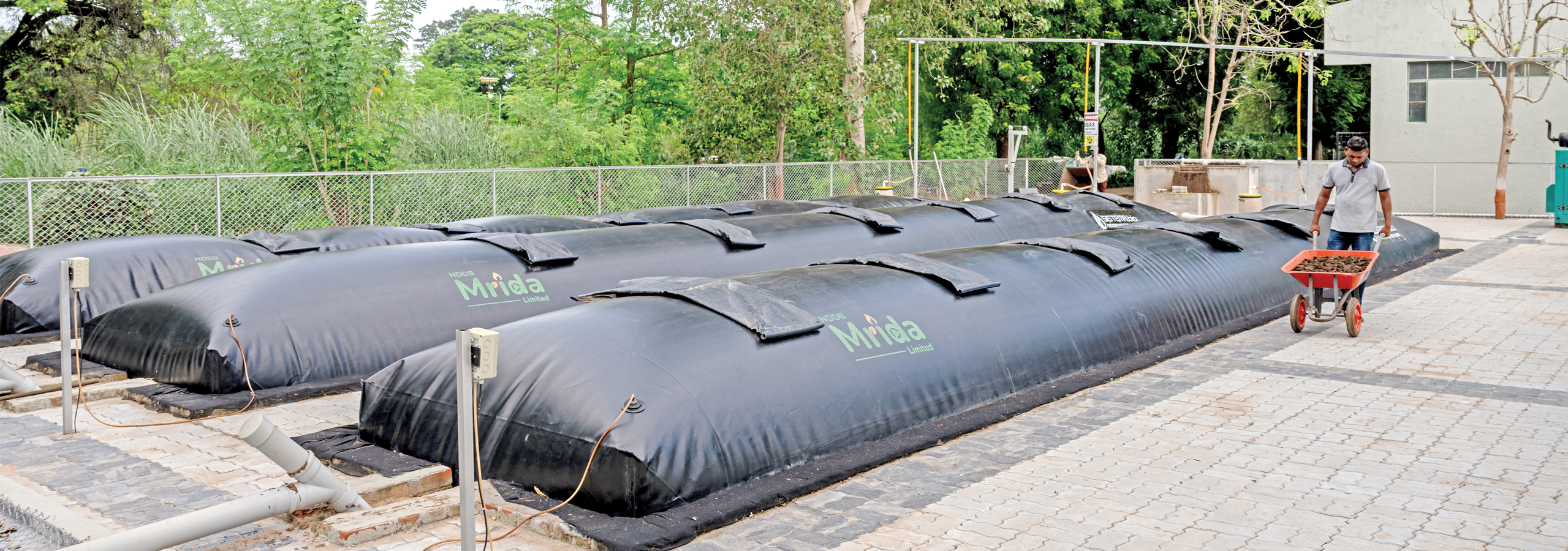
The Mujkuva Sakhi Khad Sahakari Mandali is India’s first women-led manure cooperative, pioneering the conversion of cattle dung into biogas and slurry which is a natural organic fertiliser. This initiative not only addresses waste management issues but also creates an additional revenue stream for women dairy farmers through the sale of slurry on the basis of quality testing. The biogas is used as an alternative to LPG in the households and is sufficient for a family of 5 to 6 members, 3 meals every day. This results in a saving of approximately Rs 1500 per month for the dairy farmer in addition to a steady income of around Rs 2000 per month from the sale of excess slurry. The slurry is aggregated at the village level through door-to-door testing and collection and processed into solid and liquid fertilisers in a Slurry Processing Plant.

The cooperative plays a vital role in rural women’s empowerment, as it is managed entirely by women, fostering financial independence, skill development, and leadership opportunities. It also supports sustainable agriculture by providing high-quality organic fertilizers to local farmers, reducing dependency on chemical inputs and improving soil health.

Each biogas plant of 2 m³ also reduces methane emissions to the tune of 7 tCO₂e per annum, thereby mitigating climate change as methane is a potent greenhouse gas.

The Mujkuva Solar Pump Irrigators’ Cooperative Enterprise focuses on solar-powered irrigation systems, helping farmers access a reliable and sustainable source of water for agriculture. The cooperative promotes the adoption of solar energy to replace traditional diesel- or grid-powered irrigation, thereby reducing carbon emissions and lowering farmers’ operational costs.

The cooperative was inaugurated by Hon’ble Prime Minister of India in the year 2018.

A key innovation of MSPICE is its participation in solar energy trading, where farmers sell surplus electricity generated from their solar pumps back to the grid, creating an additional source of income. This model not only enhances the economic viability of solar irrigation but also contributes to India’s renewable energy transition and energy security in rural areas.

The Mujkuva Organic Farmer Cooperative Society is committed to sustainable and organic farming practices, ensuring chemical-free, eco-friendly agricultural production. The cooperative provides training, technical support, and organic certification assistance to farmers who transition from conventional to organic farming.

The society promotes crop diversification, soil health management, and integrated pest control, reducing dependency on synthetic fertilizers and pesticides. It also facilitates market linkages, ensuring farmers receive fair prices for their organic produce through direct-to-consumer sales, farmer markets, and institutional partnerships.

Together, these cooperatives in Mujkuva serve as models of sustainability, community-driven development, and rural economic empowerment, demonstrating how innovative cooperative models can enhance livelihoods, protect the environment, and promote resilience in agriculture and dairy production.

Gauchar land development

In Mujkuva, a pioneering fodder land development initiative has been launched through a collaboration between the Mujkuva Dairy Cooperative Society (DCS) and the local Panchayat to address the persistent shortage of green fodder. Under this model, scientifically cultivated multi-cut Napier grass is grown on community land, ensuring a year-round supply of high-yield nutritious fodder for dairy farmers. Farmers can weigh and purchase the fodder at an affordable rate, ensuring a steady and reliable source of green feed for their cattle. This initiative not only helps improve milk productivity and cattle health but also reduces dependence on expensive, fluctuating market fodder prices. The use of scientific agronomic practices, including optimal irrigation, nutrient management, and periodic harvesting, maximizes fodder yield and enhances land productivity.

The project follows an innovative revenue-sharing model, where 75% of the revenue from fodder sales is allocated to the DCS to support dairy operations and farmer services, while 25% is directed to the Panchayat for local development initiatives. This ensures mutual benefits and incentivizes long-term participation from both stakeholders. The success of this community-driven green fodder initiative demonstrates a scalable and replicable model that can be adopted nationwide to strengthen fodder security, promote sustainable dairy farming, and create an additional income source for rural institutions. By leveraging cooperative strength and local governance, this model sets a new benchmark in fodder management, supporting both economic and environmental sustainability in the dairy sector.

Integrated Farming System (IFS)

The IFS model has been implemented on a small dairy farm in Mujkuva. It is a holistic approach that integrates multiple farming activities, such as crop cultivation, livestock rearing, and subsidiary enterprises, in an interdependent and interrelated manner. The IFS model provides balanced food to the dairy family due to the supply of different nutrients from various components.

Cow dung is used in biogas plants, providing fuel and saving fuel wood/LPG. The IFS model provides maximum profit and regular income year-round and sustainability to the system for small dairy farmers by combining different enterprises viz., poultry farming, goat rearing, fruit, vegetable, and flower cultivation, and biogas plant.

It also acts as a "farm school" for other small farmers, students, and other stakeholders for demonstration and adoption of sustainable practices.

PHP Code Snippets Powered By : XYZScripts.com